
Long before adulterated vegetable oils were introduced into the cuisine of the Malayali (Keralite), together with their concomitant host of ailments and diseases, the people of Kerala enjoyed a healthier way of life using pure coconut oil in their daily diet. Every town and village had its own quaint wooden oil press powered by oxen where copra (dried coconut) was crushed to extract fragrant coconut oil, leaving fresh, warm oil cakes for the cattle to feed on. People used coconut oil to anoint their hair and body. The oil would nourish the hair, prevent graying, hydrate the skin and act as a natural sunscreen. The older generations recognized the health benefits of coconut oil in fighting infections, increasing metabolism, growing muscles and reducing unwanted fat. Delicious, deep-fried teatime snacks were always prepared in coconut oil and the chief amongst these was, and still is, neyyappam. Soft and fluffy on the inside, and delightfully chewy on the outside, sweet neyyappam will steal your heart.

Yummy neyyappams!
Although neyyappams and their smaller cousins, unniyappams, are made in several different ways, here is one of my finest recipes for you. These marvelous neyyappams are made without using even a pinch of baking powder. Do make and enjoy!

| Prep Time | 2 hours |
| Cook Time | 1 hour |
| Passive Time | 1 hour |
| Servings | servings |
- 500 gm raw rice (I prefer aged B.T. rice, though any other rice can be used)
- 100 gm maida (refined white whear flour)
- 100 gm grated coconut
- 50 gm beaten rice (thin flakes do best)
- 50 gm coconut kernel or copra
- 300 gm jaggery (unrefined cane sugar)
- 7 cardamom pods
- 50 gm ripe nendran banana (peeled) (see note 1)
- 250 ml water
- 500 ml coconut oil (to deep-fry) (see note 2)
Ingredients
| |
- Soak the rice in water for an hour. Wash, drain and keep aside.
- Dip the beaten rice in a vessel containing around a liter of water and lift out immediately with a strainer. Set aside.
- Chop the banana roughly to pieces and set aside.
- Shell the cardamom and put aside.
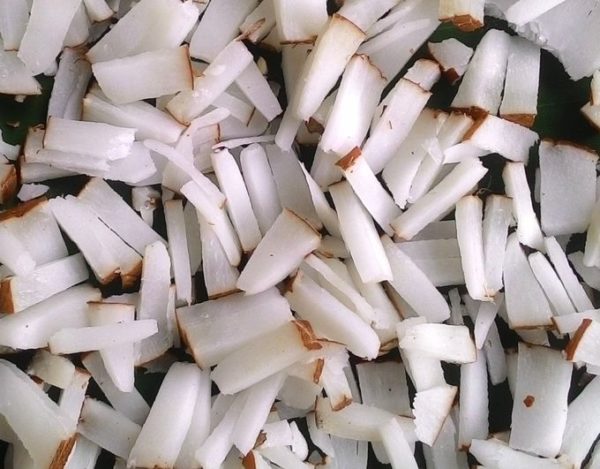
- Slice the coconut kernel or copra into thin slivers of 3 mm (1/8-inch) thickness. Chop each sliver into 1 cm (1/3-inch) wide pieces and keep aside.
- Put the jaggery together with 50 ml. of water into a pan and set on low heat. Stir until the jaggery melts fully. Sieve and set aside.
- Put the rice, the beaten rice, the banana, the maida, the grated coconut, the cardamom seeds and the melted jaggery together into a vessel.
- Use your food processor to grind the mixture into superfine paste (in two or three batches if necessary) using the remaining water (200 ml).
- Transfer to a mixing bowl and tip in the coconut slices. Stir well and let the batter rest for an hour.
- Set a deep cast-iron wok on high heat. Pour in the coconut oil (see note 2).
- As soon as the oil is quite hot (it should not smoke), stir the batter again. Pour in a ladleful of batter into the hot oil(125 ml.). Turn down the heat to medium.
- Within a minute, you can see the neyyappam rise. The batter which had sunk to the bottom starts to curl upwards and begins to float.
- Flip it over gently and fry for a minute. Flip again twice or thrice more until it has fried for a total time of three and a half minutes from inception.
- Lift out and drain off the excess oil. Continue with the next one, taking care to stir the batter each time, until all the batter is finished. You will have 15 beautiful, soft and fluffy neyyappams.
- You will love to bite on the bits of crunchy coconut as you chew. Enjoy!
- If ripe nendran banana is not available, use any smaller banana of the yellow-skinned variety.
- Neyyappams sold all over kerala in teashops are generally fried in coconut oil or other cooking oils. However, neyyappams or unniyappams distributed as prasadam (consecrated food offering) in temples are deep-fried in ghee (clarified butter). It is traditionally prepared by manually pounding the rice grown in temple fields using huge wooden mortars and pestles. These appams, while hard, are truly delicious and have a much longer shelf life. They are fried over a smoky wood fire and are dark brown in color. The aroma is indeed inviting enough to coax the gods down to earth! What about us mortals?!
Thank You Mrs. Kini for sharing your wonderful recipes on here and your mouthwateringfoodrecipes.blogspot.com. I have tried a few and they have turned out perfect to the last bite!! Thank you also for reviving your blog and adding new recipes!!!
Thank you so much, dear Mr. D Mello. for your kind appreciation of my blogs. It gladdens my heart and inspires me to do more when I read that you got to make the recipes perfectly. To carry on, however, is turning out to be an uphill task for me, for want of adequate funds. Let’s see what happens. Thanks again, and have a great day!
Can this be made 2 days before it is served? Do you think it need to be in fridge for softness or can it be kept outside?
Thanks for asking! It’d be ideal to make it fresh on the day of serving, or a day before serving, to have it sweet and munchy. After two days, it becomes hard. If you’re refrigerating it, do microwave just before serving.